In our culture, we are awash in a flood of information, but we are starving for wisdom. We have trivia and facts at our fingertips, but are we living any better? Warren Wiersbe writes, “[Proverbs] tells you, not how to make a living, but how to be skillful in the lost art of making a life.”[1] Wisdom is the ability to know how to use the knowledge that we possess. Wisdom is the big picture, rather than just endless details.
God gives us wisdom through the book of Proverbs.
Solomon wrote most of the Proverbs (Prov. 1:1; 10:1; 25:1). In total, Solomon “spoke 3,000 proverbs” (1 Kin. 4:32), and roughly 800 appear in the canonical Proverbs. This could explain the “ample material for later excerpters.”[2] The text divides the authorship of the Proverbs in this way:
Proverbs of Solomon (1:1-9:18).
Proverbs of Solomon (10:1-22:16).
Proverbs of the wise (22:17-24:24).
The Proverbs of Solomon that were “transcribed” in Hezekiah’s day (25-29).
The teachings of Agur of Massa (30).
The teachings of the mother of King Lemuel of Massa (31).
Solomon received wisdom because he asked God for it to lead Israel (1 Kin. 3:5-14, 30-34). Sadly, the wisest man died a fool. Waltke states, “Spiritual success today does not guarantee spiritual success tomorrow.”[3]
Who is Agur? Waltke thinks Agur was most likely a government official—just as Amenemope was for Egypt. He writes, “Agur son of Jakeh is unknown and undated. He may have been a court official, certainly not a king, because he upholds dynastic succession (30:22) and strong kingship (v. 31) and cautions his son Ithiel not to play the fool in exalting himself (vv. 32-33).”[4]
Who is King Lemuel and his mother? Waltke[5] states that Lemuel is “unknown,” yet “a king obviously fits the royal context of wisdom literature.”
Critics[6] held that the book of Proverbs dated to as late as the Hellenistic period, which is 350 BC or even later. But if Solomon authored most of the Proverbs and he lived from 970-931 BC, then this would contradict the book itself. Fortunately, there is good evidence that the Proverbs date early.
They claim to be written by Solomon (Prov. 1:1; 10:1; 25:1). While we are unsure about the identity of Agur and Lemuel, the superscription of Solomon would date most of the book within the 10th century (970-931 BC). The critic shoulders the burden of proof to deny the claim of the book itself.
The style and composition dates most of the proverbs (chs. 1-24) very early. Egyptologist K.A. Kitchen[7] has demonstrated the parallels in ancient Near Eastern literature. He found parallels in the title, prologue, main body, and optional subtitles in both the Proverbs and ANE wisdom literature. This occurs as far back as the third millennium BC. This led him to conclude that “Solomon is entirely the most appropriate candidate” for writing most of the Proverbs (chs. 10-24). Waltke comments, “No scholar has refuted Kitchen’s data and arguments that Solomon composed and compiled Proverbs 1-24; rather, most of them curiously overlook or ignore them.”[8]
The subtitles point to their antiquity. Garrett observes that early Mesopotamian texts contain elaborate subtitles (e.g. the old Sumerian Shuruppak), but these do not appear in later texts (e.g. the Akkadian version). Because Proverbs contains many subtitles, this fits with the early date—not the late date. Garrett writes, “This is the reverse of what an evolutionary approach to the texts would predict.”[9]
The long discourses match ancient Egyptian literature. Garrett[10] states that the long discourses in Proverbs 1-9 were thought to be evidence of a late date. However, they are “now acknowledged to be paralleled in early Egyptian literature.”
Linguistic evidence is inconclusive. Critics formerly stated that the term “covenant” (Prov. 2:17) was evidence of a late date. Now, we know that this word “appears as early as the fourteenth/thirteenth century in the Levant.”[11]
The compilation under King Hezekiah doesn’t prove a late date. Some critics[12] claim that this material wasn’t written until the time of Hezekiah in the 8th century BC (Prov. 25:1). However, this text merely states that men in Hezekiah’s day “compiled” the proverbs—not that they wrote them. Kidner states that “its contents could all have been in existence, though not all gathered into one book (see again 25:1) in Solomon’s lifetime.”[13]
This book has ample support for its canonicity. Roger Beckwith—a leading authority on canonicity—writes, “The Book of Proverbs is certainly or probably treated as Scripture by Ecclesiasticus, 4 Maccabees, the Dead Sea Scrolls, Philo, [Romans], [James], 1 Clement and Josephus. It was in the canon of Aquila, and a frequently quoted, with standard formulas for citing Scripture, in the Mishnah (Peah 5.6; 7.3; 8.9; Shabbath 9.2; Shekalim 3.2; Yoma 3.11; Taanith 4.8, etc.) and the other tannaitic literature… In the second century BC, the Greek translator of Ecclesiasticus says in his prologue that Ben Sira was led to compose his book by a study of the Scriptures: however, there is no book in the Scriptures which he has studied to such effect as Proverbs, on which his own book is modelled… Finally, in pseudo-Philo’s De Sampsone 44, perhaps written in the first century AD, either Prov. 26.27 or Eccles 10.8 is quoted with the formula ‘Scripture says’.”[14]
Furthermore, the NT cites the book of Proverbs repeatedly. Indeed, Waltke writes, “The editors of The Greek New Testament sponsored by the United Bible Societies list about 60 citations of direct quotations, definite allusions, and literary parallels of Proverbs in the New Testament.”[15]
New Testament citations of Proverbs | |
New Testament | Proverbs |
Romans 3:15 | Proverbs 1:6 |
Romans 12:16 | Proverbs 3:7 |
Hebrews 12:5-6 | Proverbs 3:11-12 |
James 4:6 | Proverbs 3:34 |
1 Peter 4:8 | Proverbs 10:12 |
1 Peter 4:18 | Proverbs 11:31 |
1 Peter 2:17 | Proverbs 24:21 |
Romans 12:20 | Proverbs 25:21-22 |
2 Peter 2:22 | Proverbs 26:11 |
James 4:13 | Proverbs 27:1 |
Yes. Solomon accessed the wisdom literature surrounding him. For instance, he had access to Egyptian documents because he married an Egyptian (1 Kin. 3:1). Specifically, The Instruction of Amenemope (1580-1100 BC) contains many parallels with Proverbs, and “its sayings most closely resemble those of Proverbs Collection IV (especially 22:17-23:11).”[16] The work is addressed to Amenemope’s son, and this work closely resembles “the background of Proverbs 22:17-24:22.”[17] Other works may include the Instruction of Ani (1,100 BC), the Mesopotamian Instruction of Shuruppak (2,000 BC), and the Counsels of Wisdom (1500-1000 BC).[18]
Consider one example. In the sayings of the wise, the author writes, “Does not he who weighs the heart perceive it?” (Prov. 24:12) Waltke writes, “This figure goes back to the Egyptian god Thoth, who is often represented as standing at the judgment of the dead beside the scales with the human heart.”[19]
Does this harm our understanding of the inspiration and inerrancy of Scripture? No. After all, the Bible itself states, “Solomon’s wisdom was greater than the wisdom of all the people of the East, and greater than all the wisdom of Egypt” (1 Kings 4:30). This implies that Solomon was familiar with other wisdom traditions, and he had access to various nations due to his expansive commercial trade. He even had an Egyptian wife (1 Kin. 3:1).
Moreover, all truth is God’s truth—whether it is discovered in nature, Scripture, or culture. Throughout the Bible, we see biblical authors citing non-biblical sources as true—even though they weren’t originally inspired (see Jude 9 for further comments).
The Proverbs contain core differences with the surrounding nations. The similarities shouldn’t gloss over the core differences between Israelite wisdom and that of the ancient Near East (ANE):
First, the surrounding cultures in the ANE focused their wisdom on patriotism, while Israelite wisdom focused on God.
Second, they focused on elite professions, whereas Israelite wisdom was for all who would listen.
Third, they thought education should come from the society or nation, whereas Israelite wisdom came from the family.
Finally, and most importantly, they thought wisdom came from observation, whereas the Israelites believed it began with revelation.[20] Ross writes, “The biblical material is unique in its prerequisite of a personal faith in a personal God. To the Hebrews the success of wisdom did not simply require a compliance with wise instructions but trust in, reverence for, and submission to the Lord (Prov. 1:7; 3:5-6; 9:10), who created everything and governs both the world of nature and human history (3:19-20; 16:4; 21:1).”[21]
The Proverbs are in the genre of wisdom literature. Admittedly, this genre is somewhat difficult to define. Regarding the “definition and identification of wisdom literature,” Garrett[22] writes that “extensive study has produced no consensus.” He writes, “Even criteria such as form and style are of little help, as is apparent when comparing certain wisdom-influenced portions of narrative to the wisdom of Proverbs.” That said, he writes, “It is possible to assert that certain forms are most frequently found in wisdom literature.”[23]
In Hebrew, the term “proverb” (māšāl) suggests “the idea of likeness.”[24] We see this usage in the psalms, where we read, “People, despite their wealth, do not endure. They are like (māšāl) the beasts that perish” (Ps. 49:12). Allen Ross writes, “A proverb may then be described as an object lesson based on or using some comparison or analogy. It may be a short saying that provides a general truth (Ezek 16:44), a lesson drawn from experience (Ps 78:2-6), a common example (Deut 28:37), or a pattern of future blessing or cursing (Ezek 21:1-5). The purpose of a proverb is to help one choose the best course of action among those available—the foolish way is to be avoided and the wise way followed.”[25]
The term “proverb” comes from the Latin term proverbium, which is composed of the roots pro (“instead of”) and verbum (“words”). In short, a proverb is a short, pithy, memorable statement that says a great deal in few words. We have many proverbs in our culture:
“Haste makes waste.”
“Where there’s smoke there’s fire.”
“The early bird gets the worm.”
“Look before you leap.”
“Like mother, like daughter.”
“Nothing ventured nothing gained.”
These are not universal moral commands but general wisdom principles. They are short and memorable maxims—not technically precise.
Garrett defines a proverb in this way: “[It is] an ethical axiom, that is, a short, artistically constructed ethical observation or teaching.”[26] It is a “brief pithy sentence, a vivid and striking speech, a rapidly drawn picture” and it compels “the hearer or reader to form a judgment on himself, his situation or his conduct.”[27] Consider this Sumerian proverb:
Build like a [lord], go about like a slave!
Build like a [slave], go about like a lord![28]
Proverbs are written as monocolons (Prov. 24:26), bicolons (parallelism, progression, and proverbial merismus), tricolons (Prov. 22:29; 25:13), or quatrains (Prov. 24:5-6, 19-20).[29] Most are bicolons, where the two lines relate to one another (see “Understanding Hebrew Poetry”). Proverbs also occur as extended discourses. They can be admonitions (Prov. 6:1-5), prohibitions (Prov. 1:10-19), confessions (Prov. 4:3-9), riddles (Judg 14:14), numerical sayings (Prov. 30:18-19), rhetorical questions (Prov. 30:4), wisdom poems (Prov. 31:10-31), or vicarious teachings (Prov. 7:6-27).
The Proverbs appear with no context. Many parts of the book are discourses, and most of the book consists of a “string of pearls,” without any discernible organization. Garrett thinks that this is because proverbs are “presented in the seemingly haphazard way we encounter the issues with which they deal.”[30]
The Proverbs focus on natural consequences rather than divine judgment. If you follow the Proverbs, this will change your life and outcomes. Waltke[31] summarizes this as “character > conduct > consequence.” This is different than the divine judgment of God on those who disobeyed his legal covenant in Exodus, Leviticus, and Deuteronomy.[32]
The Proverbs derive from supernatural revelation rather than mere natural observation. In his book In Man We Trust (1972), scholar Walter Brueggemann[33] understood wisdom literature to mean that God trusts people to lead their own lives through wisdom gained through observation of the natural world. Not true. Wisdom literature comes from “the fear of the Lord” (Job 28:28; Prov. 1:7), not human ingenuity. We agree with Waltke when he writes, “The authors of Proverbs drew inspiration through keen observation and cogent reflections on creation, but they brought to their task Israel’s world-and-life view and used the creation to confirm it.”[34] While the authors of Proverbs drew analogies from nature (Prov. 6:6-8; 30:15-31), they “did not depend on those analogies for their authority.” Instead, they used these illustrations to “buttress their world-and-life views, which were already firmly in place.”[35] Indeed, the Proverbs state, “There is a way that appears to be right, but in the end it leads to death” (Prov. 14:12).
“Wisdom” (ḥokmâ) refers to “masterful understanding,” “skill,” and “expertise.” It can refer to skill in art (Ex. 28:3; 31:6), leadership (2 Sam. 14:2; Job 39:15, 17; Eccl. 4:13; Jer. 50:35), diplomacy (1 Kin. 5:7, 21), war (Isa. 10:3), sailing (Ps. 107:27), discernment (1 Kin. 3:28), leadership (Isa. 11:1-6), and knowledge (1 Kin. 4:29-34; 5:9-14; 10:2-3). Waltke concludes, “The possession of wisdom enables humans to cope with life and to achieve what would otherwise be impossible.”[36]
Garrett[37] states that wisdom has at least four different properties. First, wisdom is practical. It addresses basic skills of life (Ex. 28:3; Ps. 107:27). Second, it is intellectual. It involves “understanding” and “knowledge” (cf. 1 Kin. 4:33). Third, it is moral. It deals with what is “right” and “fair,” and it involved “discipline.” Fourth, it is discerning. He writes, “Biblical wisdom seeks to resolve or at least adjust to the ambiguities of life. It seeks the reality behind the appearances. Not only that, it affirms that the believer can understand mysteries that outsiders cannot and so may couch its teaching in enigma.”
The wise person is teachable (Prov. 18:15) and he is a teacher (Prov. 13:14; 15:7). He listens (Prov. 12:5; 13:1) and receives correction (Prov. 9:8; 10:8). He spends time with wise people (Prov. 13:20), and he helps others (Prov. 12:18).
Wisdom is more than mere intelligence. In his book Outliers (2008), Malcolm Gladwell interviews Christopher Langan, who is considered to be the smartest man in America, and maybe the world. His IQ is somewhere between 190 and 210. He earned a perfect score on the SAT—even though he took a nap during the test.
Yet, he dropped out of college after his first year because of financial problems. He felt that he had more to teach his professors than learn from them. When Gladwell published his book, Langan worked at a bar as a bouncer.
“Simple” (petî). They are gullible, simple-minded, and naïve.[38] The root word refers to being “open, spacious, wide,” and it refers to the person “open to all kinds of enticement, not having developed a discriminating judgment as to what is right or wrong.”[39] They are gullible (Prov. 14:15), easily tempted (Prov. 9:4, 16), and quick to fall into traps (Prov. 22:3). This is the sort of person who gets repeatedly hurt but can’t figure out why (Prov. 14:15; 22:3).
In his course on the Proverbs, Waltke describes the “gullible” in this way: “Open to everything. Committed to nothing.” They have grown up in Israel, but they are only nominal Israelites. Yet, they are “capable of being shaped and improved by the educational process (1:4; 8:5; 12:25; 21:11), and still have hope of joining the company of the wise (cf. 1:22; 9:4).”[40]
“Fool” (ʾewîl and kesîl). Two words are used to describe the “fool” in Proverbs (ʾewîl and kesîl). The first term (ʾewîl) refers to an “idiot,” and the second term (kesîl) can refer “thick” or “fat.”[41] Both terms “refer to people with morally deficient characters that prompt their irrational behavior.” They are “blockheads because, deaf to wisdom, from their distorted moral vision, of which they are cocksure, they delight in twisting values that benefit the community.”[42] They “despise discipline and correction (15:5 and 15:20), lack wisdom (10:14, 21 and 14:33), have poor speech (10:8, 10; 17:28; 27:3 and 10:18; 12:23; 15:2; 19:1), lack self-control and are hot tempered (12:16; 20:3 and 19:11), are morally insolent, intractable, and incorrigible (12:15; 24:7 and 15:14; 17:10; 18:2; 26:5, 11; 28:26).”[43] We’ve lost moral language in our culture. We often call somebody an idiot or a moron. God calls us a fool.
“Mocker” (lēṣ). This is “the defiant and cynical freethinker.” He is “the person who will not live by wise and moral teachings and is not content to let others do so without his cynical mocking.”[44] He hates wise people (Prov. 9:7-8; 15:12), because of his pride (Prov. 21:24) and arrogance (Prov. 14:6). The cynical mocker has a “genius for invective and denigration that impresses the gullible as long as he has his way (19:25; 21:11).”[45] Ultimately, his cynicism hurts himself (Prov. 9:12), and God scoffs at the scoffer (Isa. 29:20).
“Sluggard” (ʿāṣēl). Waltke writes, “The sluggard’s unreliable and procrastinating nature makes him a constant source of irritation to all those who need to do business with him (10:26; cf. 26:6) and a shame to his parents (10:5) as he destroys the family inheritance (19:13-15; 24:31).”[46]
Allen P. Ross, “Proverbs,” in The Expositor’s Bible Commentary: Psalms, Proverbs, Ecclesiastes, Song of Songs, ed. Frank E. Gaebelein, vol. 5 (Grand Rapids, MI: Zondervan Publishing House, 1991).
Derek Kidner, Proverbs: An Introduction and Commentary, vol. 17, Tyndale Old Testament Commentaries (Downers Grove, IL: InterVarsity Press, 1964).
Duane A. Garrett, Proverbs, Ecclesiastes, Song of Songs, vol. 14, The New American Commentary (Nashville: Broadman & Holman Publishers, 1993).
Bruce K. Waltke, The Book of Proverbs, Chapters 1-15, The New International Commentary on the Old Testament (Grand Rapids, MI: Wm. B. Eerdmans Publishing Co., 2004).
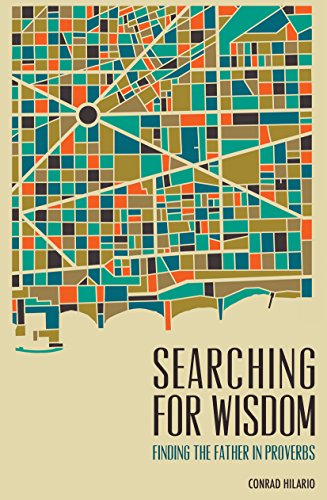
In order to have a better grasp on reading the Proverbs, we suggest reading our earlier article, “Understanding Hebrew Poetry.” We also endorse our friend Conrad Hilario’s book Seeking for Wisdom: Finding the Father in Proverbs (2018). His book gives clear and thoughtful reflections on the book of Proverbs from a man who lives out what he writes.
[1] Warren W. Wiersbe, Be Skillful, “Be” Commentary Series (Wheaton, IL: Victor Books, 1996), 7.
[2] Gleason Archer Jr., A Survey of Old Testament Introduction, 3rd. ed. (Chicago: Moody Press, 1994), 518.
[3] Bruce K. Waltke, The Book of Proverbs, Chapters 1–15, The New International Commentary on the Old Testament (Grand Rapids, MI: Wm. B. Eerdmans Publishing Co., 2004), 36.
[4] Bruce K. Waltke, The Book of Proverbs, Chapters 1–15, The New International Commentary on the Old Testament (Grand Rapids, MI: Wm. B. Eerdmans Publishing Co., 2004), 36.
[5] Bruce K. Waltke, The Book of Proverbs, Chapters 1–15, The New International Commentary on the Old Testament (Grand Rapids, MI: Wm. B. Eerdmans Publishing Co., 2004), 36.
[6] C. H. Toy, A Critical and Exegetical Commentary on the Book of Proverbs, ICC (Edinburgh: T & T Clark, 1977), xix–xxxi.
R. H. Pfeiffer, Introduction to the Old Testament (New York: Harper and Row, 1941), 659.
[7] Kenneth A. Kitchen, “Proverbs and Wisdom Books of the Ancient Near East: The Factual History of a Literary Form,” Tyndale Bulletin 28 (1977): 69-114.
[8] Bruce K. Waltke, The Book of Proverbs, Chapters 1–15, The New International Commentary on the Old Testament (Grand Rapids, MI: Wm. B. Eerdmans Publishing Co., 2004), 35.
[9] Duane A. Garrett, Proverbs, Ecclesiastes, Song of Songs, vol. 14, The New American Commentary (Nashville: Broadman & Holman Publishers, 1993), 41.
[10] Duane A. Garrett, Proverbs, Ecclesiastes, Song of Songs, vol. 14, The New American Commentary (Nashville: Broadman & Holman Publishers, 1993), 51.
[11] Duane A. Garrett, Proverbs, Ecclesiastes, Song of Songs, vol. 14, The New American Commentary (Nashville: Broadman & Holman Publishers, 1993), 51.
[12] R. B. Y. Scott, “Solomon and the Beginnings of Wisdom in Israel,” Vetus Testamentum, Supplements 3 (1969): 262–79.
[13] Derek Kidner, Proverbs: An Introduction and Commentary, vol. 17, Tyndale Old Testament Commentaries (Downers Grove, IL: InterVarsity Press, 1964), 27.
[14] Roger T. Beckwith, The Old Testament Canon of the New Testament Church and Its Background in Early Judaism (Grand Rapids, MI: Wipf & Stock Publishers, 1986), 76-77.
[15] Bruce K. Waltke, The Book of Proverbs, Chapters 1–15, The New International Commentary on the Old Testament (Grand Rapids, MI: Wm. B. Eerdmans Publishing Co., 2004), 126.
[16] Bruce K. Waltke, The Book of Proverbs, Chapters 1–15, The New International Commentary on the Old Testament (Grand Rapids, MI: Wm. B. Eerdmans Publishing Co., 2004), 30.
[17] Allen P. Ross, “Proverbs,” in The Expositor’s Bible Commentary: Psalms, Proverbs, Ecclesiastes, Song of Songs, ed. Frank E. Gaebelein, vol. 5 (Grand Rapids, MI: Zondervan Publishing House, 1991), 883.
[18] Allen P. Ross, “Proverbs,” in The Expositor’s Bible Commentary: Psalms, Proverbs, Ecclesiastes, Song of Songs, ed. Frank E. Gaebelein, vol. 5 (Grand Rapids, MI: Zondervan Publishing House, 1991), 883-884.
[19] Bruce K. Waltke, The Book of Proverbs, Chapters 1–15, The New International Commentary on the Old Testament (Grand Rapids, MI: Wm. B. Eerdmans Publishing Co., 2004), 31.
[20] Duane A. Garrett, Proverbs, Ecclesiastes, Song of Songs, vol. 14, The New American Commentary (Nashville: Broadman & Holman Publishers, 1993), 57–59.
[21] Allen P. Ross, “Proverbs,” in The Expositor’s Bible Commentary: Psalms, Proverbs, Ecclesiastes, Song of Songs, ed. Frank E. Gaebelein, vol. 5 (Grand Rapids, MI: Zondervan Publishing House, 1991), 885.
[22] Duane A. Garrett, Proverbs, Ecclesiastes, Song of Songs, vol. 14, The New American Commentary (Nashville: Broadman & Holman Publishers, 1993), 20.
[23] Duane A. Garrett, Proverbs, Ecclesiastes, Song of Songs, vol. 14, The New American Commentary (Nashville: Broadman & Holman Publishers, 1993), 29.
[24] Allen P. Ross, “Proverbs,” in The Expositor’s Bible Commentary: Psalms, Proverbs, Ecclesiastes, Song of Songs, ed. Frank E. Gaebelein, vol. 5 (Grand Rapids, MI: Zondervan Publishing House, 1991), 904.
[25] Allen P. Ross, “Proverbs,” in The Expositor’s Bible Commentary: Psalms, Proverbs, Ecclesiastes, Song of Songs, ed. Frank E. Gaebelein, vol. 5 (Grand Rapids, MI: Zondervan Publishing House, 1991), 904.
[26] Duane A. Garrett, Proverbs, Ecclesiastes, Song of Songs, vol. 14, The New American Commentary (Nashville: Broadman & Holman Publishers, 1993), 29–30.
[27] A. S. Herbert, “The Parable [MĀŠĀL] in the Old Testament,” SJT 7 (1954) 180–96. Cited in Bruce K. Waltke, The Book of Proverbs, Chapters 1–15, The New International Commentary on the Old Testament (Grand Rapids, MI: Wm. B. Eerdmans Publishing Co., 2004), 57.
[28] Sumerian Proverbs by E. I. Gordon (1959), p.270. Cited in Derek Kidner, Proverbs: An Introduction and Commentary, vol. 17, Tyndale Old Testament Commentaries (Downers Grove, IL: InterVarsity Press, 1964), 18.
[29] Duane A. Garrett, Proverbs, Ecclesiastes, Song of Songs, vol. 14, The New American Commentary (Nashville: Broadman & Holman Publishers, 1993), 34.
[30] Duane A. Garrett, Proverbs, Ecclesiastes, Song of Songs, vol. 14, The New American Commentary (Nashville: Broadman & Holman Publishers, 1993), 46.
[31] Bruce K. Waltke, The Book of Proverbs, Chapters 1–15, The New International Commentary on the Old Testament (Grand Rapids, MI: Wm. B. Eerdmans Publishing Co., 2004), 73.
[32] Duane A. Garrett, Proverbs, Ecclesiastes, Song of Songs, vol. 14, The New American Commentary (Nashville: Broadman & Holman Publishers, 1993), 25–26.
[33] Walter Brueggemann, In Man We Trust (Richmond: John Knox, 1972).
[34] Bruce K. Waltke, The Book of Proverbs, Chapters 1–15, The New International Commentary on the Old Testament (Grand Rapids, MI: Wm. B. Eerdmans Publishing Co., 2004), 82.
[35] Bruce K. Waltke, The Book of Proverbs, Chapters 1–15, The New International Commentary on the Old Testament (Grand Rapids, MI: Wm. B. Eerdmans Publishing Co., 2004), 81–82.
[36] I am indebted to Waltke for this list of traits associated with ḥokmâ. Bruce K. Waltke, The Book of Proverbs, Chapters 1–15, The New International Commentary on the Old Testament (Grand Rapids, MI: Wm. B. Eerdmans Publishing Co., 2004), 76–77.
[37] Duane A. Garrett, Proverbs, Ecclesiastes, Song of Songs, vol. 14, The New American Commentary (Nashville: Broadman & Holman Publishers, 1993), 67–68.
[38] Allen P. Ross, “Proverbs,” in The Expositor’s Bible Commentary: Psalms, Proverbs, Ecclesiastes, Song of Songs, ed. Frank E. Gaebelein, vol. 5 (Grand Rapids, MI: Zondervan Publishing House, 1991), 906.
[39] R. Laird Harris, Gleason L. Archer Jr., and Bruce K. Waltke, eds., Theological Wordbook of the Old Testament (Chicago: Moody Press, 1999), 742.
[40] Bruce K. Waltke, The Book of Proverbs, Chapters 1–15, The New International Commentary on the Old Testament (Grand Rapids, MI: Wm. B. Eerdmans Publishing Co., 2004), 111.
[41] Bruce K. Waltke, The Book of Proverbs, Chapters 1–15, The New International Commentary on the Old Testament (Grand Rapids, MI: Wm. B. Eerdmans Publishing Co., 2004), 113.
[42] Bruce K. Waltke, The Book of Proverbs, Chapters 1–15, The New International Commentary on the Old Testament (Grand Rapids, MI: Wm. B. Eerdmans Publishing Co., 2004), 112.
[43] Bruce K. Waltke, The Book of Proverbs, Chapters 1–15, The New International Commentary on the Old Testament (Grand Rapids, MI: Wm. B. Eerdmans Publishing Co., 2004), 112.
[44] Allen P. Ross, “Proverbs,” in The Expositor’s Bible Commentary: Psalms, Proverbs, Ecclesiastes, Song of Songs, ed. Frank E. Gaebelein, vol. 5 (Grand Rapids, MI: Zondervan Publishing House, 1991), 910, 949.
[45] Bruce K. Waltke, The Book of Proverbs, Chapters 1–15, The New International Commentary on the Old Testament (Grand Rapids, MI: Wm. B. Eerdmans Publishing Co., 2004), 114.
[46] Bruce K. Waltke, The Book of Proverbs, Chapters 1–15, The New International Commentary on the Old Testament (Grand Rapids, MI: Wm. B. Eerdmans Publishing Co., 2004), 115.
In order to have a better grasp on reading the Proverbs, we suggest reading our earlier article, “Understanding Hebrew Poetry.” We also endorse our friend Conrad Hilario’s book Seeking for Wisdom: Finding the Father in Proverbs (2018). We know of nothing like this book. It gives clear and thoughtful reflections on the book of Proverbs from a man who lives out what he writes. In an inimitable and yet accessible style, Hilario explores the wisdom of the book of Proverbs. Readers would be wise to read and reread the timeless truths he surveys in this timely book.
James earned a Master’s degree in Theological Studies from Trinity Evangelical Divinity School, graduating magna cum laude. He is the founder of Evidence Unseen and the author of several books. James enjoys serving as a pastor at Dwell Community Church in Columbus, Ohio, where he lives with his wife and their two sons.